Saturday, 2 August 2008

Long Days and Short Nights


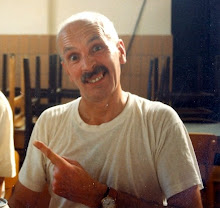
Maybe I should have thought it out a bit more carefully, but just lately my itinerary has been slightly flawed. For example, I arrived in Chennai at 4.30 in the morning. It is a difficult time to do anything, especially when you find the only decent waiting room in Chennai Central station completely chock-a-block with sleeping passengers. So there wasn’t anything else to do except get out of the station at about 7am. My mood was not the best, as you can see from the picture!

fruit in Mysore market
The days before, up in cool and pleasant Mysore should have been relaxing. This was the case for the first day when I arrived but the following day I took on an arduous 12 hour tour from 8.30 to 8.30 in the evening. It finished at the Brindavan gardens, which are below the walls of a very large dam. After the sun goes down all the waterfalls, fountains and miniature rapids are lit up. Then there is the musical fountain at 7.30, strangely dancing to Bollywood favourites. Anyway, a hard day made much more bearable by the company of Jenny, a fellow traveller from New York. Two other places were the zoo and Mysore palace which I had seen in the darkness of the previous evening. I expect you guessed right; it was a Hindu priest blessing a proud owner’s new car. If he has an accident I suppose its money back. Closer to home, or hotel, is another Mysore attraction. It is the large highly colourful market where Jenny bought some perfumed oil from a very precocious junior salesman of 12 years.

Rally in Madras
Mysore zoo
outside Mysore market
Mysore Palace

The early arrival in Madras was responsible for my being seen entering the gates of the old St George’s Fort with the early morning workers. It is in fact almost completely occupied by the Indian army who have converted most of the inhabitable historical buildings for various sections of their army. But it was easy to see that the purpose built colonial structures once were the headquarters of the East India Company which started in Madras and the British Army. In those days long ago, the British Empire was in its infancy, in the 17th century. St Mary’s Church is the oldest Anglican Church in India with some rather grotesque tomb stones from the late 17th century. They depict what I presumed to be the skeletal form of the ‘great reaper’. However, the more recent memorial plaques are dedicated to members of the British Army, and some civil servants, who died in the service of company and country. In an amble along some of the back lanes I was struck by the multitude of birds kicking up quite a racket in the trees above me. Very nice actually. On the way back to the station I came across a highly excited crowd attending an ever popular political rally. The din was deafening; I think I prefered the birds in the trees.

canon at the fort

I should have got off the train at 5.20 (2nd Aug) but slept so soundly I woke up not long before the train came to the end of its route. Trichy was by then about 90km back down the line. But everything turned out fine as I only had to wait an hour before a train arrived heading back to Trichy. By 11am I had secured a room in the Ashby hotel, which happened to be my first choice from the Lonely Planet guide book. Now its 1pm and I have had my ration of fried eggs and toast and almost my entire minuscule wardrobe is now hanging up in the courtyard drying.
cheers Derek


Thursday, 31 July 2008

The Monsoon Has Struck

The monsoon has hit Mumbai at last. It’s well over a month late and started raining 4 days ago. The heat that I have been sweating through during the trip as far as Bhubaneshwar has now been replaced with a comfortably warm damp air but not a hint of the sun. The rains arrived in the east before I got there and caused cancellations of trains due to damaged bridges south west from Calcutta. None of that affected me but now this late rain in the west has meant that my train going south from Mumbai was going to be late by well over 4 hours. Consequently, because of missing connections later, I took the first available train to Bangalore where a train to Mysore starts from. The 30 day Indrail pass is invaluable in this situation because I don’t have to wait in queues to buy a ticket and no reservation has to be obtained as there is a quota for pass holders. Just jump on the train and ask the ticket inspector to find a berth for me. EEEasy.

Shopping, or is it consumerism, has caught on in all the major cities of India with the emergence of the shopping mall. I popped into one on the way to the railway station. I needed a shirt as both my tee shirts were getting to be unbearable. As you can see, some quite modern equipment has been implemented in ‘Big Bazaar’, as it is called.


Tuesday 29th July.
MysoreFeeling pretty tired and happy that the train journeys have finished for a couple of days. Since I left Vishakapatnum last Saturday morning, by bus, I have covered over 2,500 km by train. But now in the hotel Dasaprakash in Mysore. I reached here on a slow passenger train from Bangalore in about 4 hours which was enough to finish this phase of the trip. Even that was made much more bearable as I travelled that part with a Thai girl who was on the train from Mumbai, not to mention the three little cheeky faced kids sitting with us.
Had a great journey from Mumbai with six great travel companions in my part of the carriage. Three of them were business guys, two working for a British company. Then there was a kindly old lady going to visit her daughter in Bangalore and opposite her bunk was an extremely elderly gentleman who bore all the hall marks of being one of the freedom fighters who fought for independent India all those years ago. One of my Indian comrades suggested he was a rich farmer but we never found out who was right. The other was of course the Thai girl learning English here in Mysore.
Yesterday evening was a great social occasion as we chatted about everything from bombs to cooking curry. I suppose not much difference really; the latter has a somewhat slower slightly less violent reaction. I don’t feel particularly threatened by these bombings as India is a very big place and the likelihood of being caught up in such a blast is very remote. However, if they strike at the railways it could cause some hold-ups that could interfere with my tight plans. The other inconvenience could be the heavy rains in this part of India. But still, in 3 days time the situation will probably be quite different, hopefully not worse.
So, now making myself at home doing my usual chores such as washing clothes and getting all my batteries up to scratch. Mysore sits at about 2,400ft and the temperature is around a very agreeable 23/24 degrees.

After filling myself with a badly needed meal I took a stroll down to the palace about a kilometre away. I wanted to get some night shots which would have been considerably more spectacular if the thousands of electric light bulbs had been lit. Alas, it was Tuesday and display is only put on when it’s Sunday, and only for one hour. The reason for this is that a huge amount of precious energy is used. But I did spot something rather odd happening at a small temple outside the gates. If you can’t guess what is going on I’ll illuminate you with the answer in my next blog. Cheers Derek
PS 6am and in what promises to be a hot oppressive day in Chennai

Monday, 28 July 2008

Araku, and back, to civilization

Vishakapatnum (Vizak) and Araku

With hardly any sleep from Bhubaneshwar, I was shortly on the 6.50 am train to Araku. To add to my misery I was desperately hungry through not eating during the tour the day before. It’s a very scenic ride through countless tunnels and bridges for over 120 km. At the end of the 5 hour journey I was just about done. Not knowing anything about the hotels in the area I accepted the help of a taxi driver who promptly took me a couple of kilometres up the road to a small cluster of buildings and hotels surrounded by paddy fields. I don’t know why but I was expecting sky high prices, the first hotel looked fine and the price was a very reasonable 300 Rs a night. Wow…Time for washing, eating, sleeping and battery charging.

As you might imagine, by the pictures of Araku, it’s an agricultural area. It’s also a tribal region where the Indian Govt is trying to educate and create employment for these poverty riddled people. The atmosphere is to say the least, after the turmoil and chaos, placid to the extreme. One or two things stick out in my mind like the incredibly overloaded rickshaws. Many carry school kids to and from their homes. A multitude of small brown faces, in white uniforms, stared out at me from the sides and back of these little vehicles, while at least ten school bags hung in a cluster like giant coconuts from one side of these taxis. It also seems that most of the rickshaws are now fitted with boom boxes, those speakers otherwise known as sub woofers that send out a throbbing bass beat of the music being played. Apart from this modern development, the villagers around lived their lives herding buffalo and goats, and tending the delicate dykes that retain the water in the patch work of paddy fields.

It appears that the Araku valley is the chosen place for honeymoon couples, not unlike many other hill resorts. As I said before, hotels were an unknown quantity until I actually arrived because the only information I could find was that there were only a few highly priced places and a government run resort also with prices way above my budget. In fact, not 2 or 3 km from the train station there were quite a few low priced places. Apart from the scenery and fresh air there isn’t much else, but that was all I wanted for a couple of days. I don’t think the place I stayed at has an address except Railway Station Road, Araku Valley. Judging from the small collection of very new luxury hotels I surmised that the Indian boom is having an effect on this idyllic, rather backward, backwater.

Before reading the egg story I would like to explain that fried eggs with toast is a very common breakfast in India, but not in Araku it seems
To be a fried egg or not to be is a very tricky question.
Here in the restaurant at Araku. Ordering a breakfast, which is normally very straight forward, turned into a complete fiasco when I ordered fried eggs just as written in the menu. At first the waiter said it wasn’t possible, which I thought strange because he could supply an omelette. But then he relented and said it was possible. When the eggs arrived they were in the form of four halves of brown shrivelled fried hard boiled eggs. I’m afraid the sight of these abominations nearly turned my stomach. When I told him that I didn’t want his burnt offerings, and that I wanted ordinary fried eggs, he then decided that poached egg was what I wanted. Well, the conversation went to and fro for the next five minutes in which I clearly showed him the difference between boiled and fried eggs with drawings in my note book. He then said that what I should have ordered the poached eggs. But poached eggs are not fried eggs I tried to impress. The whole absurd issue was settled when I opted for the omelette, but I am still completely mystified as to what a fried egg is. I suppose this is typical of
India where IS can often mean many things. Confused, don’t worry, that’s just the way it is. Or is it


The cinema, yes there was a cinema, was showing a Bollywood movie in Teligu language. When I was a kid we used to call the small independent places ‘flea pits’, which is more than apt for this one in Araku. During the first half, they seem to have interludes here, I was aware of itchiness around my legs and ankles. Mosquitoes I thought so I didn’t bother with the end of this typical song and dance routine. Back at the hotel I discovered a large mozy had attached itself to my leg. Not pleasant.

I had to catch the 8am (only) bus back to Vizak because a serious problem crept up on me – a dire lack of Rupees. The train wouldn’t have got me back until 9 pm which is obviously a bad time for changing money. The other thing was that it was Saturday and half day for all banks. This is a good example of the kind of problems that one can encounter in India, especially because in many towns, and cities, the only places available are state banks which seem to have a vice like grip on these otherwise simple transactions. While I was on the bus, travelling through some pretty remarkable countryside, I felt another kind of problem creeping up.

By midday the bus was strutting down the long station road of Vizak. Then I spotted a sign for State Bank of India so I quickly grabbed my bags and hopped off the bus which was held up in a traffic jam. My heart sank when the bank assistant said that they didn’t change money at that branch. This often happens. He then told me to go to an office for a financial company two blocks up the road. The office of Weizman Ltd is inside one of those new complexes that are shooting up everywhere in India. I hesitantly asked if they changed Euros, and found to my great relief that the rumour was true. But that still left me with the other problem which was solved not more than 10 metres from the office, behind a door on the corner of the landing. Feeling extremely relieved with a fresh wad of 100 Rs notes I wondered if the manager knew where I could upload my blog, which had been a miserable failure up in Araku. Another company just a few metres away allowed me the use of their private (fast) connection. Somewhat better than two birds, d0nt you think? Anything is possible here.
Plenty of time for writing today on the train to Mumbai. The 1500 km trip takes about 28 hours. Only one drawback is that I have to finish this blog before the battery runs out. No sockets in this carriage, which are usually fitted in AC carriages.
Half way to Mumbai at the moment. Cheers Derek


Friday, 25 July 2008

Orissa, Land of Gods, Temples, and Lost Teeth

I am writing this blog from the Araku Valley, in the hills (Eastern Ghats) above Vishakapatnum. The valley is totally opposite to the towns and cities I have spent most of my time in so far, as there are only small settlements and villages here. But more about that later, so take a step back two days.
On arriving in Bhubaneshwar, the state capital of Orissa, I went through what has become a familiar procedure of finding a place to stay for a night. It seems that this city is very popular right now as almost all of the hotels near the station were either too expensive or fully booked. However, after trying a few places I found a room, but not quite what I really wanted to pay.
The itinerary is proving somewhat taxing with late night trains and early arrivals. This means my sleeping time is often limited.
After my usual routine of getting me and things washed, then sorting out the pictures and movies in the computer, and writing a blog, I went down to the town for something to eat and of course find a suitably fast Internet cafĂ© in which to upload that self same blog. Not an easy quest – especially here.
The mighty temple cars lined up and the wheels.

The following day I took a 9 hour tour with the Orissa State Tourism bus. The places on the tour were: Pipili, Konark, Chandrabhago (beach), Puri Jagannath Temple and then back to the beach down from Puri. A lot of names here but the pix will help and some short explanations. Many hundreds of thousands of people in Orissa work in textile manufacture and in Pipili lots of colourful examples of this trade are found in the shops along the street. Konark is the place to see the Sun Temple which is one of the finest examples of the unique Orissa temple design. Its importance is so great that it is now a world heritage site. The man size stone carved wheels in the walls are perhaps the iconic symbols for the Sun Temple. At Puri, the Jagannath Temple, is one of the holiest pilgrimages a Hindu can make. Every year during a festival, the massive temple cars are pulled down the long wide street by thousands of Hindus to another temple at the other end. This is all done so that one Hindu God can visit one of his mates down the road! Puri is also the place where Buddha carelessly lost one of his teeth, which was consequently whisked off to Kandy in Sri Lanka. BTW. The word juggernaut, for big trucks, comes from the temple ‘cars’ of Jagannath Temple. I think the beaches are self explanatory, but what a relief to breath in the fresh sea air. But a bit too rough for swimming.


Next stop Vishakapatnum (Vizak)
So that’s all from Orissa. See You

Tuesday, 22 July 2008

Twenty Four Hours in Calcutta

Arrived in Bhubaneshwar this morning and it seems that the place is pretty full. Tried about 5 hotels before I could find a room which is a bit more expensive than I wanted. So, today is a day of rest till I go on a tour tomorrow. I thought this a good time to put together a short movie covering the events and people in Calcutta.
Naturally, one from the hoards of taxi drivers at Howrah station (Calcutta) muttered that the ferry across the mighty Hoogly River was closed but taking no notice I was soon steaming down river to Babu Ghat where I had chosen to get started in Calcutta. Sudder Street is the place where all the cheap accommodation is to be found and I was doing ok walking for about 20 mins when I happened to see a rickshaw puller idling on the other side of the road. It was my first ride on such a contraption which can, as far as I know, only be found in this bustling city.
I took advantage of the Metro which is by far the cheapest way of getting around, though be it just a bit crowded. Monday in Calcutta was the pre ordained day for a political rally demonstrating against the US/Indian nuclear deal. Even though it would for certain help to solve the dire energy needs that are here, it has been manipulated into a political issue simply to drag one govt down and be replaced with another which doesn’t have any better ideas for energy production. Anyway, it was a massive crowd that gathered in a large square called Esplanade, near the centre of the city. Some estimates as high as 100,000 which is not exactly an impossibility here in a city like this.
I meandered through the side streets near M G road where I was constantly asked to take pictures of perfect strangers along the way and then later, it was time to head back to Howrah station. It isn’t difficult to imagine what Babu Ghat was like with many of the people at the rally heading back too. I think I waited about 45 mins before the frequent ferries became less than utterly full to over capacity. The number of times I have heard of overcrowded ferries turning over didn’t leave much to the imagination.
A pleasant evening was had at Howrah before my train departed. The lights on the bridge made this huge British construction quite hypnotic.
Cheers Derek
PS What does M G stand for in India?